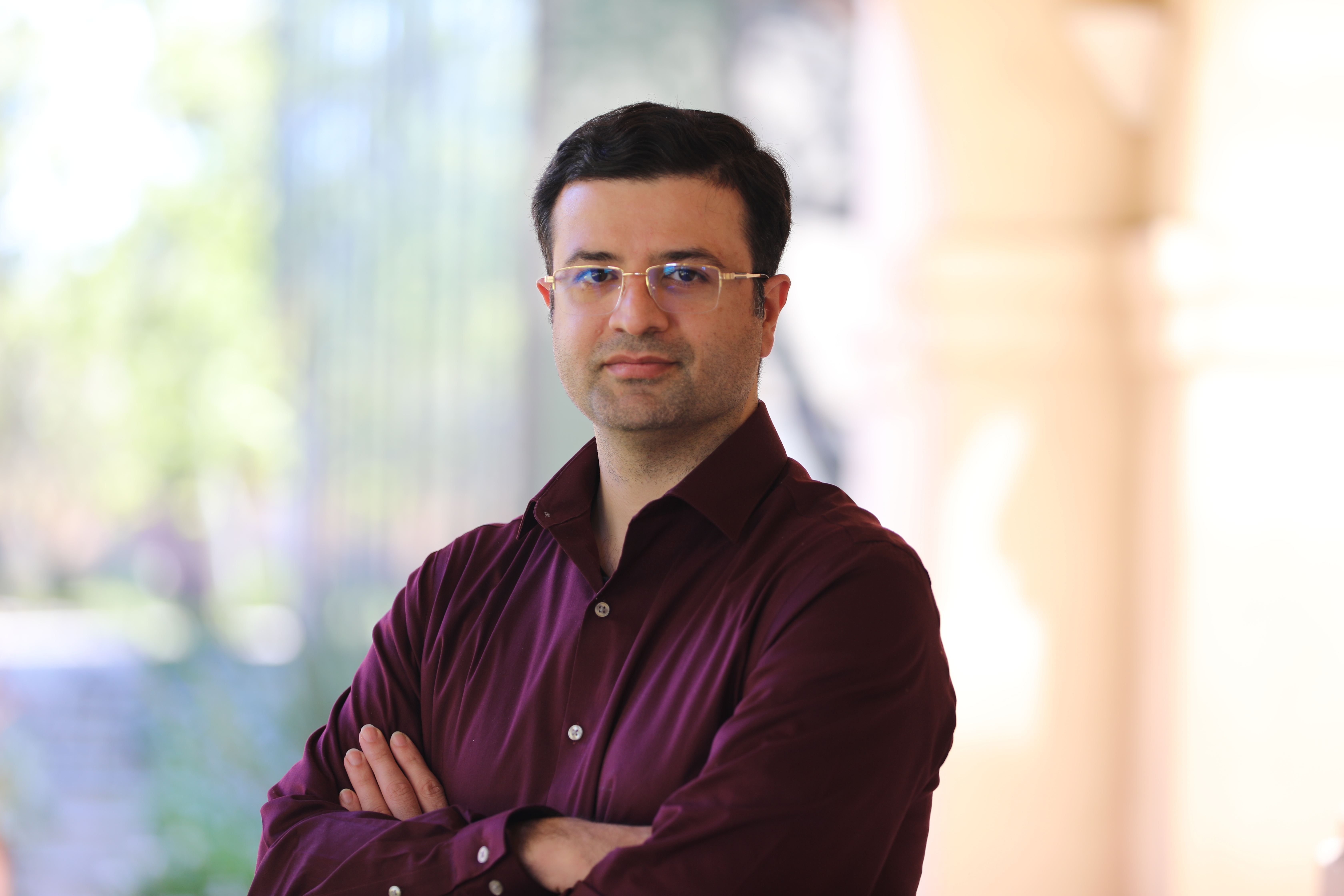
I am an Earth and planetary scientist at Caltech.
I am broadly interested in the exploration of planets and moons in the solar system.
I investigate what these objects are formed from, how they evolve, and whether life can exist in them.
Introduction
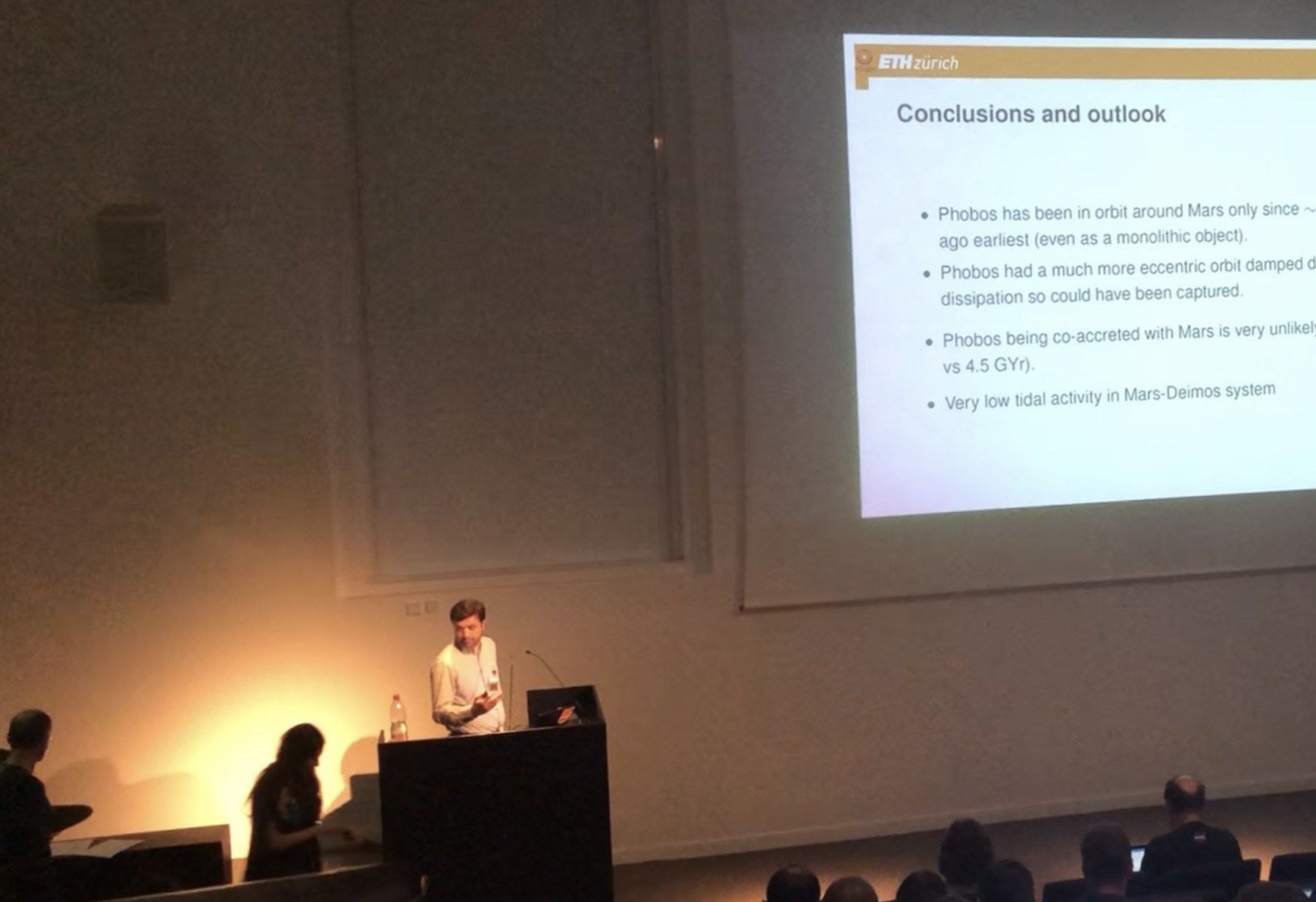
ETH Zurich
I am currently a researcher in the groups of
Prof. Mark Simons and Prof. Jim Fuller
in the Divisions of Geological and Planetary Sciences and Physics, Mathematics and Astronomy at the California Institute of Technology, with close collaborations with the group of Dr. Steven Vance at NASA’s Jet Propulsion Laboratory in Pasadena. As an Earth, space, and math enthusiast—and, by training, a planetary geophysicist—I study the interior and evolution of various planets and moons in our solar system using geophysical methods, especially in connection to space missions.
The ultimate goal is understanding the origin and present-day interior properties of planets and moons, particularly their habitability. In my current role at Caltech, I mainly work on modeling the interior structure and geodetic observables of Saturn’s spectacular moon Enceladus and Jupiter’s fascinating moons Europa, Io, and Ganymede, as well as Mars and its two mysterious moons, Phobos and Deimos.
Presenting results on the orbital evolution of Martian moons at the
InSight Science Team Meeting — Paris, 2019
Before joining Caltech, I obtained my PhD in planetary geophysics followed by a postdoctoral position at ETH Zurich, Switzerland, one of the world’s leading universities in Earth and planetary sciences. My PhD in Zurich was defined in the context of NASA’s Mars InSight mission, a Discovery-class mission that placed the first successful seismometer on the surface of the Red Planet. I studied the interior of Mars and its moons Phobos and Deimos, mainly exploiting their gravitational response known as solid-body tides. I also modeled the evolution of the Martian moons to decipher their history and origin. Next, I worked on the tidal and thermal evolution of icy/ocean worlds such as Pluto and Charon, with the aim of understanding the properties of their subsurface oceans.
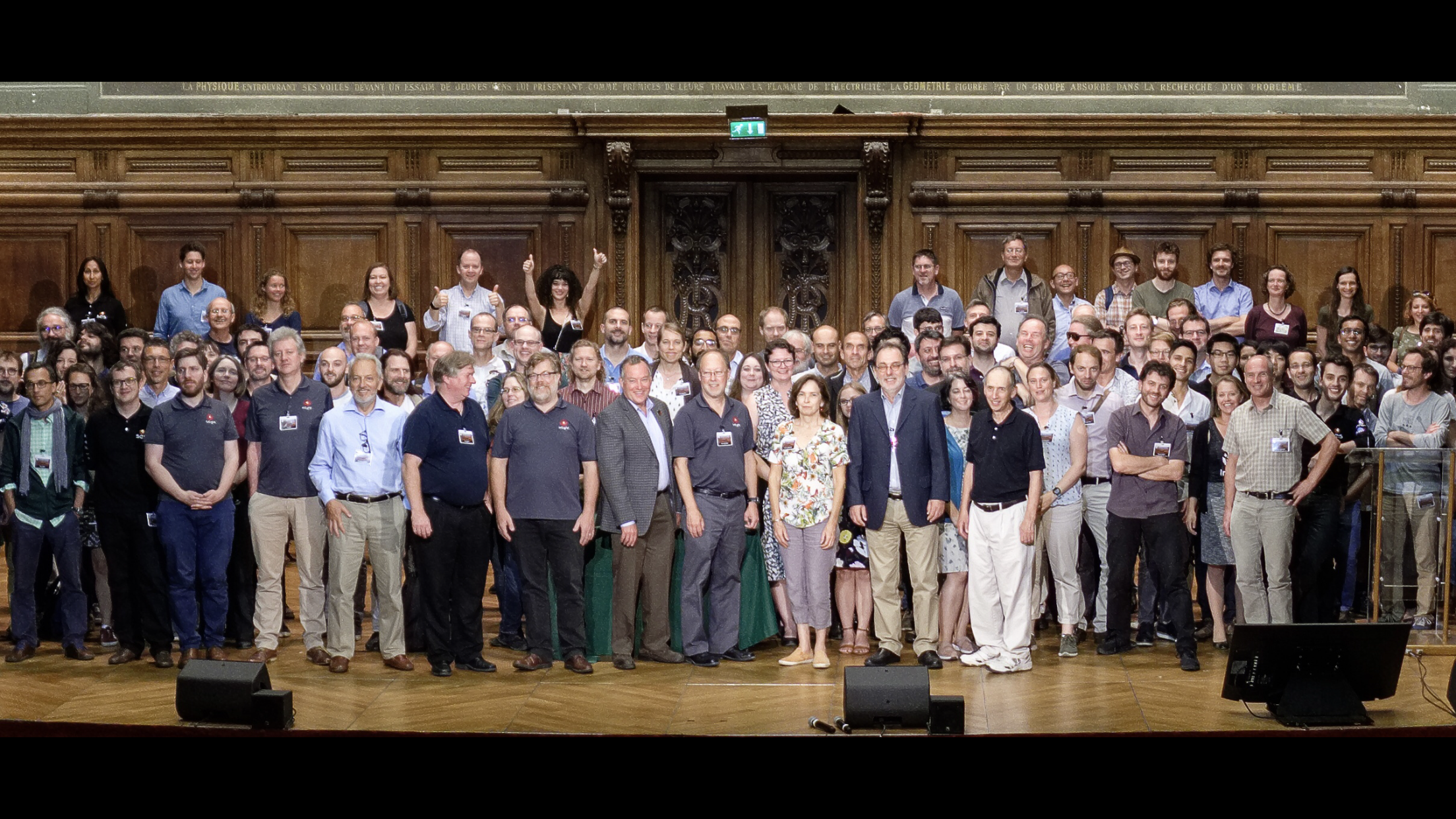
Mars InSight mission Science Team meeting, Graz, September 2018.
I obtained a master’s degree in Civil Engineering, with a thesis that had substantial geophysical overlap, and a bachelor’s degree in Civil Engineering from Sharif University of Technology in Tehran.
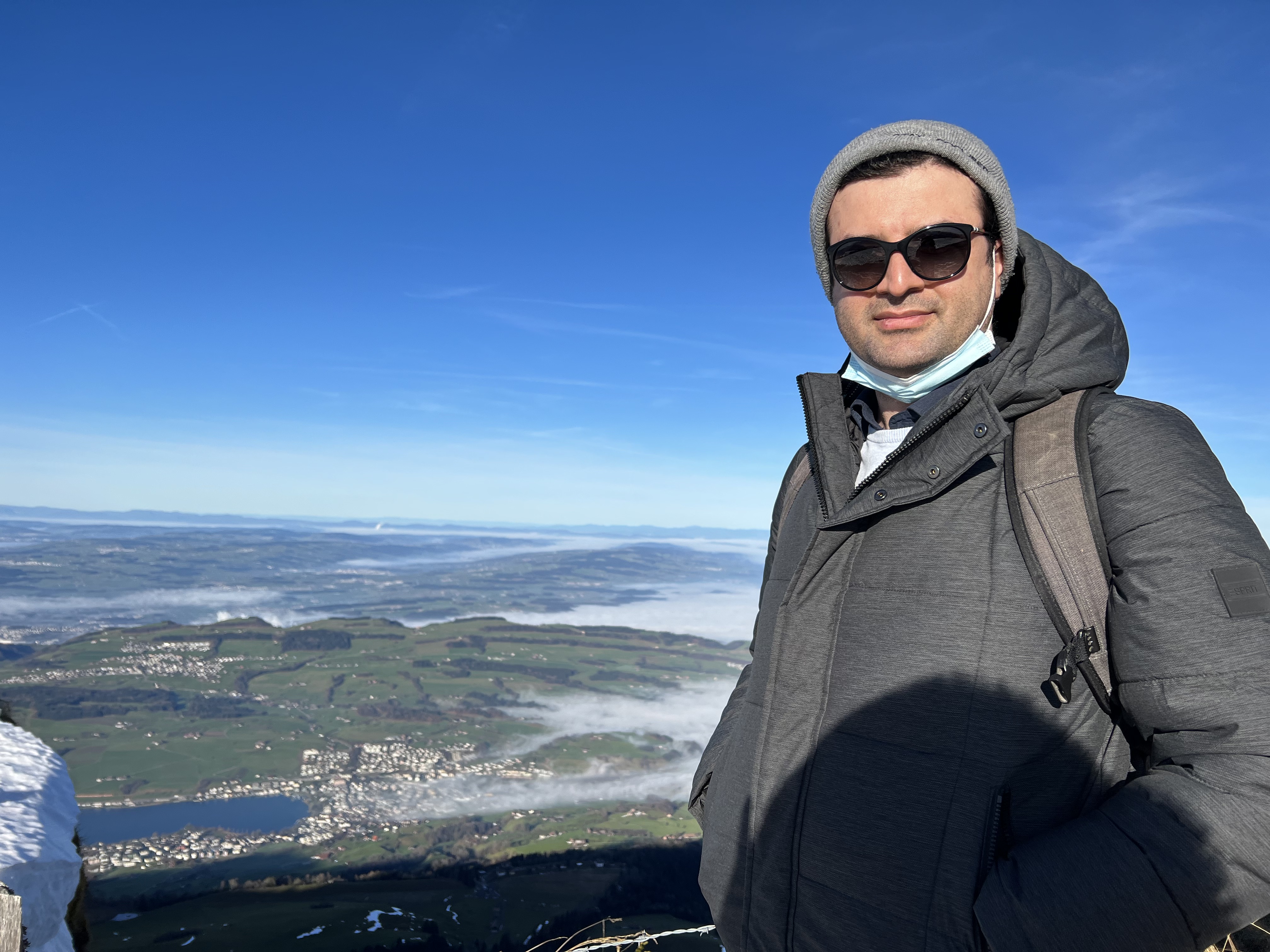
Rigi, Switzerland
Alongside my research, in my free time I enjoy photography, traveling, playing and watching soccer, swimming, listening to music, hiking, and reading poetry.
Research
Research interests
My research interests span the multidisciplinary study of the interior structure, evolution, origin, and habitability of planetary bodies. Given the interdisciplinary nature of Earth and planetary science and with a background in geophysics, I approach questions in these fields with a practical, objective methodology, bringing together numerical methods, inversion techniques, orbital dynamics, thermodynamics, and solid-state mechanics to understand the present-day state and histoey of planets and moons in the solar system.
My primary areas of interest include Mars and its moons Phobos and Deimos, and icy bodies such as Enceladus, Europa, Ganymede, Titan, Triton, Pluto, and Charon. I’m always curious to explore other planets and moons, including our own planet, as well. More specifically, I’m currently interested in the following areas in planetary geophysics:
Earth and Planetary bodies interiors
Extra-terrestrial Habitability
Solid body rheology and dissipation mechanisms
Coupled thermal–orbital-chemical evolution of planetary bodies
Gravity fields, libration, and rotation
Geophysical inverse problems
Below is a brief description of current and past projects (more details coming soon).
Current projects
I am working on several projects related to Enceladus, the Galilean moons, Mars and its moons, and theoretical orbital dynamics.
Completed projects
Icy-ocean worlds
I began work on ocean worlds by studying the Pluto–Charon system. I extended my orbital evolution model to cases where neither body’s spin nor orbital rate is synchronized. I then combined this with a thermal evolution model for icy bodies that includes, in addition to radiogenic heating, heat generated as a result of tidal dissipation. This framework was used to study the coupled thermal and orbital evolution of Pluto and Charon to constrain properties of their subsurface liquid oceans.
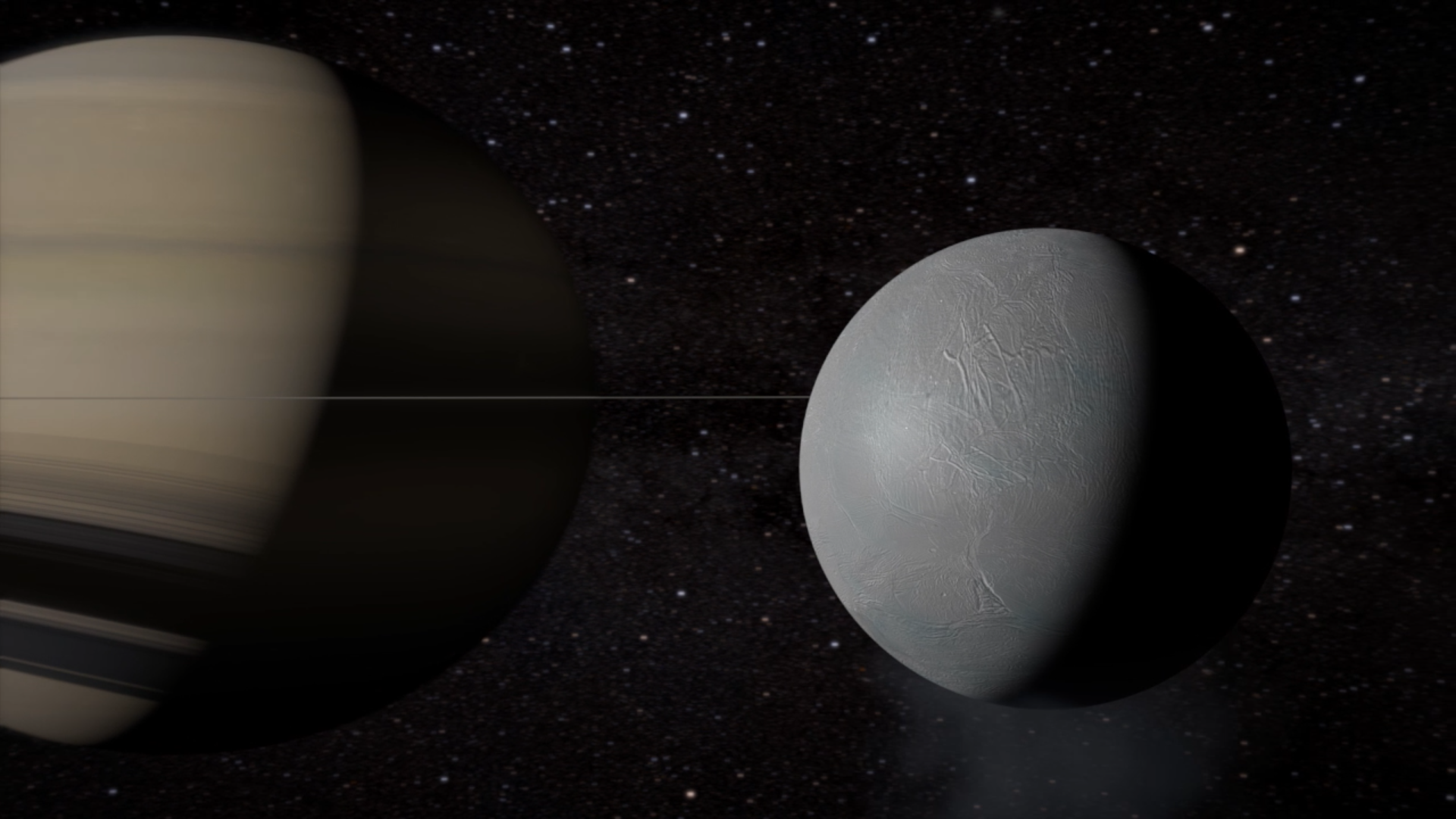
Saturn’s moon Enceladus is heated by eccentricity tides and hosts a subsurface ocean—one of the prime candidates for habitable environments in the solar system.
Mars
I have worked on a range of problems in planetary science and geophysics, including modeling the interior of Mars using a self-consistent thermodynamics approach and several viscoelastic models to compute tidal response. I treat this as an inverse problem, using Markov Chain Monte Carlo sampling to constrain interior properties. This study provided pre-mission insights into major interior structure elements of Mars, including the size of its layers and the mantle’s viscoelastic properties. I also predicted attenuation within Mars across a wide range of periods—from seismic waves and normal modes to tides and long-period planetary wobbles.
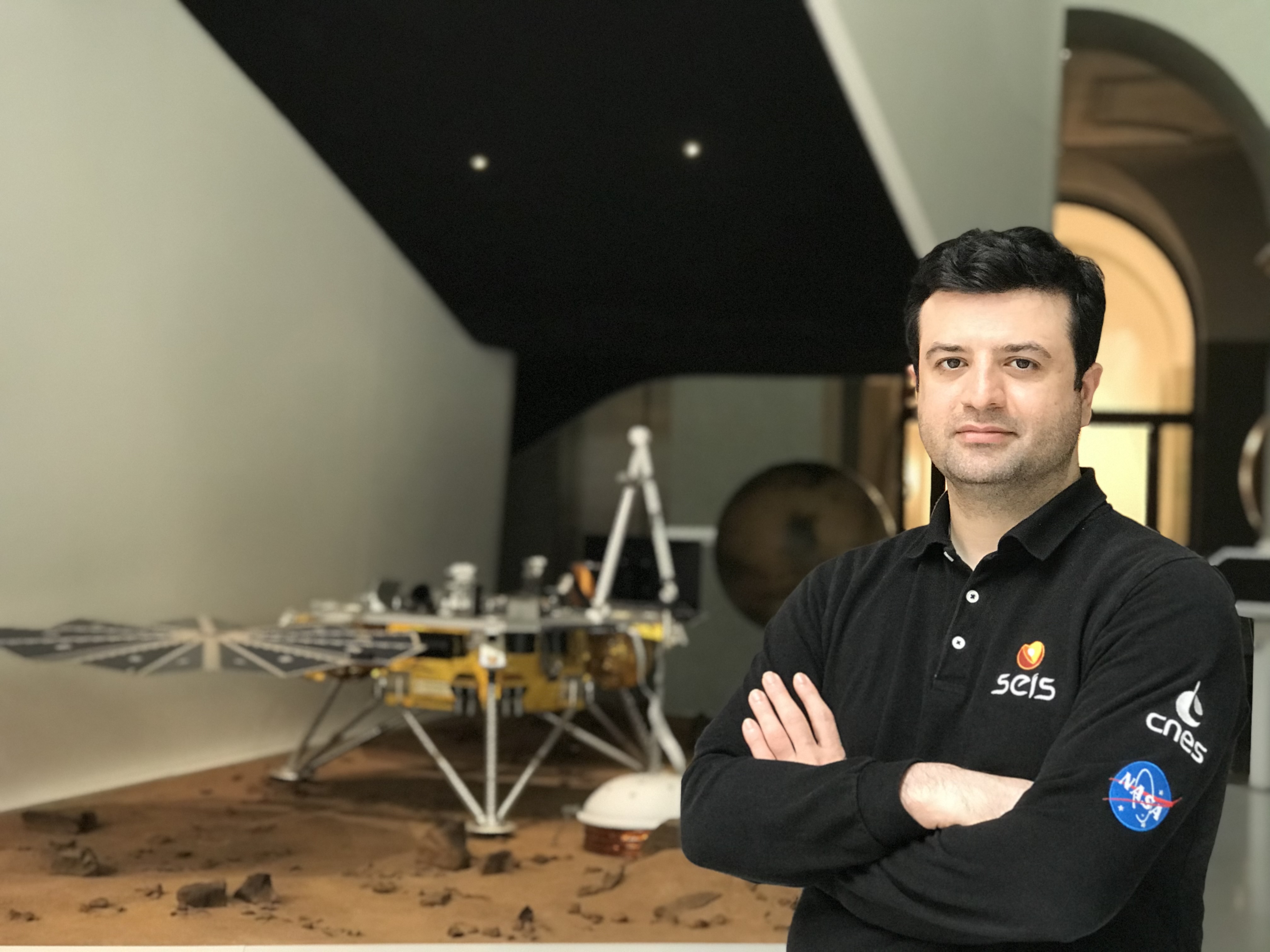
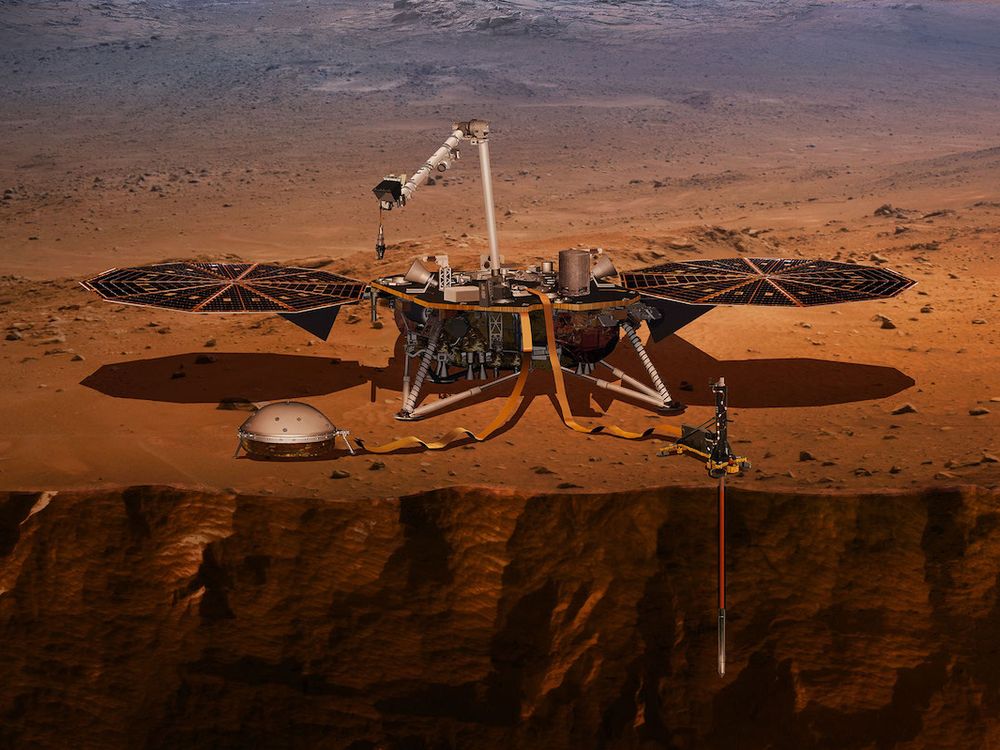
Mars InSight lander — the first spacecraft to successfully place a geophysical suite on another planet.
Phobos and Deimos
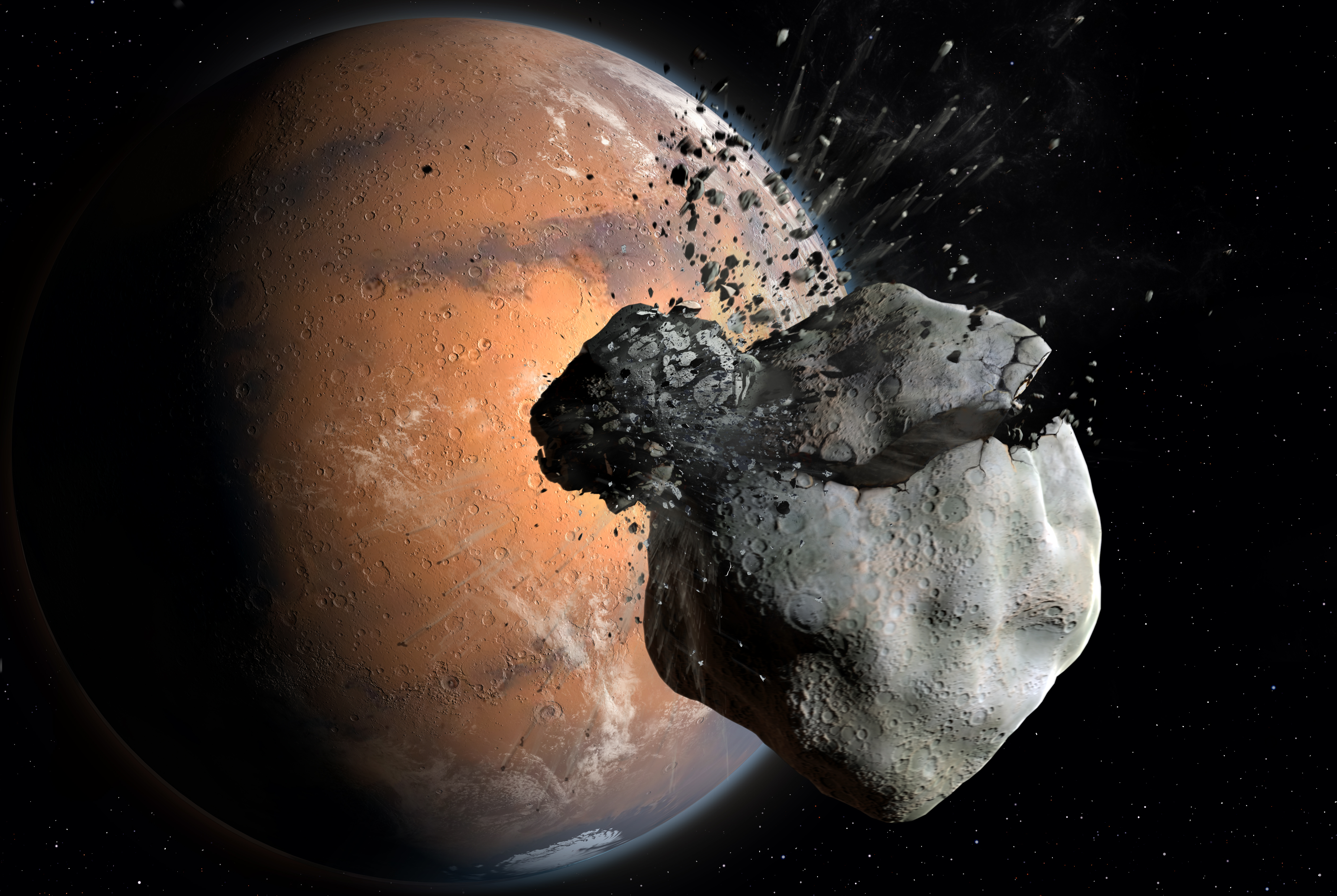
I proposed a new model for the origin of Phobos and Deimos and studied their orbital evolution to investigate their history, origin, and interior structure. Using constraints from Mars’ interior structure (inferred from seismic waves and tides), I predicted dissipation during the orbital evolution of the two moons. I developed a rigorous tidal–orbital evolution model incorporating high-order eccentricity functions and tidal dissipation due to libration in longitude. This work led to a hypothesis that the moons are fragments of a common progenitor disrupted roughly 1–2.7 billion years ago.
This work was broadly covered by the media and ranked highly among papers gaining attention in Nature Astronomy. A press article by ETH Zurich is available
here.
A feature by Mashable is
here.
Articles in German by
20 Minuten
and in French by
Yahoo News
are also available.
Artistic view of the progenitor disrupted to form Phobos and Deimos (credit: Mark Garlick).
Seismic waves in complex media
I have worked on theoretical aspects of seismic wave propagation in media consisting of anisotropic solids and fluids, using semi-analytical methods to understand the effects of anisotropy and fluid–solid interactions on wavefields.
Publications
Feel free to email me for a copy of any paper if you don’t have access.
Selected Journal Articles
Titan’s strong tidal dissipation precludes a subsurface ocean, F. Petricca, S. D. Vance, M. Parisi, D. Buccino, G. Cascioli, J. Castillo-Rogez, B. G. Downey, F. Nimmo, G. Tobie, B. Journaux, A. Magnanini, U. Jones, M. Panning,
A. Bagheri, A. Genova, J. I. Lunine Nature, 2025.
Exploring the Interior Structure and Mode of Tidal Heating in Enceladus, A. Bagheri, M. Simons, R. S. Park, A. Berne, D. Hemingway, M. Melwani-Daswani, S. D. Vance, The Planetary Science Journal, 2025.
Exploring the Tidal Responses of Ocean Worlds with PyALMA, F. Petricca, S. Tharimena, D. Melini, G. Spada, A. Bagheri, M. J. Styczinski, S. D. Vance, Icarus, 2024.
Tidal Constraints on the Martian Interior, L. Pou, F. Nimmo, A. Rivoldini, A. Khan, A. Bagheri, T. Gray, H. Samuel, P. Lognonné, A.-C. Plesa, T. Gudkova, D. Giardini, Journal of Geophysical Research, 2022.
The tidal–thermal evolution of the Pluto–Charon system, A. Bagheri, A. Khan, F. Deschamps, H. Samuel, M. Kruglyakov, D. Giardini, Icarus, 2022 (376).
Constraints on the interior structure of Phobos from tidal deformation modeling, A. Dmitrovskii, A. Khan, C. Boehm, A. Bagheri, M. van Driel, Icarus, 2022 (372).
Tidal insights into rocky and icy bodies: An introduction and overview, A. Bagheri et al., Advances in Geophysics, 2022.
Dynamical evidence for Phobos and Deimos as remnants of a disrupted common progenitor, A. Bagheri, A. Khan, M. Efroimsky, M. Kruglyakov, D. Giardini, Nature Astronomy, 2021, 5(6), 539–543.
Tidal dissipation in dual-body, highly eccentric, and non-synchronously rotating systems: applications to Pluto–Charon and TRAPPIST-1e, J. Renaud et al., The Planetary Science Journal, 2021, 2(1).
Tidal response of Mars constrained from laboratory-based viscoelastic dissipation models and geophysical data, A. Bagheri et al., Journal of Geophysical Research, 2019, 124(11), 2703–2727.
The asymmetric elastic wavefields …, A. Bagheri et al., Applied Ocean Research, 2017 (62), 119–138.
Tsunami generation … in an anisotropic substratum, A. Bagheri et al., Journal of Geophysical Research: Oceans, 2016, 121(10), 7701–7715.
Dynamic Green’s functions … within the liquid, A. Bagheri et al., Wave Motion, 2016 (63), 83–97.
Dispersion of Rayleigh, Scholte, Stoneley and Love waves …, A. Bagheri et al., Geophysical Journal International, 2015, 203(1), 228–245.
Selected Talks
Coupled Worlds: Interior–orbital Interaction, the origin and habitability of planetary bodies, IPGP, Oxford, October 2025
Post-Capture Thermal and Orbital Evolution of Triton and implications for present-day ocean, LPSC, March 2025
Can the gravity field and libration measurements resolve competing scenarios on the interior properties of Enceladus?, Nightingale mission meeting, November 2024
Can the gravity field and libration measurements resolve competing scenarios on the interior properties of Enceladus?, Keck Institute for Space Studies, November 2024
Assessing the habitability of Enceladus with a suite of geophysical investigations, Astrobiology Science Conference, May 2024
Using tides to reveal the interior and evolution of rocky and icy bodies in the context of planetary missions — applications to the Mars system, Enceladus, and Pluto–Charon, Caltech, Jan 2024
Tidal constraints on the interior and evolution of rocky and icy planets and moons, TU Delft, Jul 2023
Heating planetary bodies with tidal interactions, Latsis Symposium on the Origin and Prevalence of Life, ETH Zürich, Sep 2022
Tidal evolution of planetary bodies, Rocky Worlds II, Oxford, Jul 2022
Tidal and thermal evolution of Pluto and Charon, ETH Zürich, Apr 2022
Dynamical evidence for Phobos and Deimos as remnants of a disrupted common progenitor, EPSC, Sep 2021; DPS, Oct 2021; Leiden Observatory, Mar 2021; CIPS (UC Berkeley/UCLA), Feb 2021; University of Zürich, Feb 2021
Investigating rheological models in the context of geophysical inversion for planetary structure, AGU Fall Meeting, San Francisco, Dec 2019
Orbital evolution of the Martian moons and their origin, ETH Zürich (Mar 2019), MIT EAPS (Mar 2019), UC Berkeley (Apr 2019)
Analysis of the dynamic response of a transversely isotropic solid in contact with a liquid layer, University of Washington, Jul 2016
Selected Conference Proceedings
Hydrothermal and Tidal Energy Flux at Titan, Enceladus, and Europa, O. Apurva, Y. Yung, G. Tobie, D. Adams, J. Park, A. Schoenfeld, S. D. Vance, J. Yang, A. Bagheri, S. Bartlett, M. Malaska, F. Petricca, N. Thiagarajan, R. Lopes, EPSC 2025
Post-Capture Thermal and Orbital Evolution of Triton and Implications for Present-Day Ocean Properties, A. Bagheri, Q. B. van Woerkom, M. Rovira-Navarro, S. D. Vance, J. Castillo-Rogez, M. Melwani-Daswani, F. Petricca, LPSC 2025.
Determining the optimal measurements required to infer the geophysical characteristics of Enceladus, A. Bagheri, M. Simons, S. Vance, R. S. Park, A. Berne, M. Melwani-Daswani, AGU 2024.
Does Enceladus Have a Global Ocean?, M. Simons, A. Berne, A. Bagheri, S. Puel, R. S. Park, AGU 2024.
Tidal Constraints on the Properties of Enceladus’s Subsurface Ocean, A. Bagheri, B. Journaux, A. Berne, M. Simons, 55th LPSC, 2024.
Tidal–Thermal Evolution of the Pluto–Charon System, A. Bagheri et al., 52nd LPSC, 2021.
Geophysical Constraints on Phobos’s Interior Structure, A. Bagheri et al., 52nd LPSC, 2021.
Orbital Evolution of the Mars–Phobos Tidal System, A. Dmitrovskii et al., 50th LPSC, 2021.
Tidal evolution of a Martian-satellite system, A. Bagheri et al., 43rd COSPAR Scientific Assembly, 2021.
The Influence of Viscoelastic Properties of Ice on the Probability of Higher-order Spin–Orbital Resonance Trapping …, J. Renaud et al., AGU, 2020.
Tidal Dissipation in Dual-Body, Highly Eccentric, and Non-synchronously Rotating Systems …, J. Renaud et al., DPS Meeting, 2020.
Orbital Evolution of the Mars–Phobos Tidal System, A. Bagheri et al., DPS Meeting Abstracts, 2019 (6), 507.07.
Investigating rheological models in the context of geophysical inversion for planetary structure, A. Bagheri et al., DPS Meeting Abstracts, 2018, P44A-09.
Science and Outreach News
I’m actively looking for a suitable faculty position.
Here I post updates on research activities and occasional outreach efforts to share planetary science with broader audiences. This page will be expanded.
News
December 2025: Our game-changing paper stating that Titan, a large moon of Saturn, likely does not have a subsurface ocean was published in Nature. This finding runs counter to scientific arguments that have persisted for several decades. The result is based on a reanalysis of the static and time-variable gravity field measured by the Cassini spacecraft.
The open-access paper can be found in here. A press release by NASA can be found here.
December 2025: A paper I collaborated to entitled "Synchronisation of a tidal binary by inward orbital migration. The case of Pluto and Charon" is now available in ArXiv.
September 2025: The paper I led on Enceladus’s interior structure and internal tidal heating distribution was accepted by The Planetary Science Journal. The open-access article is available here.
September 2025: I participated in a Keck Institute for Space Studies workshop on an Interplanetary Laser Trilateration Network. Details here.
Last week, we hosted the "Interplanetary Laser Trilateration Network" study. 🛰️🌎
— Keck Institute for Space Studies (@KISS_Caltech) October 3, 2025
June 2025: I participated in the Outer Planets Analysis Group (OPAG) meeting in Tucson, Arizona.
May 2025: I joined Part II of the Keck Institute for Space Studies workshop on building a Digital Twin for a mission to assess Enceladus’s sustainable habitability. Info here.
Last week, we hosted the second part of the "Digital Twins for solar system Exploration: Enceladus" study 🪐🌔🖥️
— Keck Institute for Space Studies (@KISS_Caltech) May 12, 2025
March 2025: I presented work on the thermal and orbital evolution of Triton at the 56th Lunar and Planetary Science Conference, Houston.
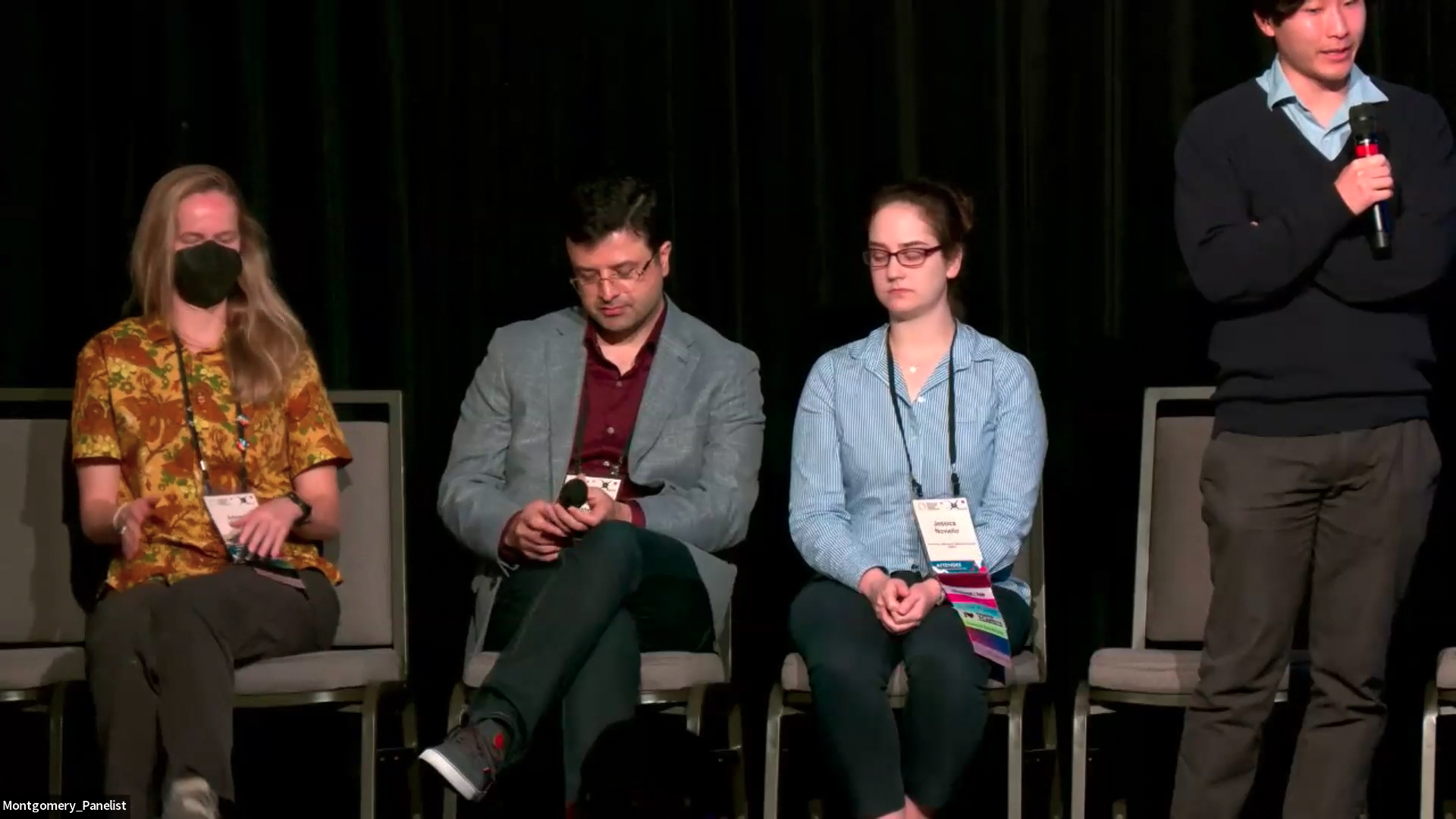
Q&A panel for my Triton presentation.
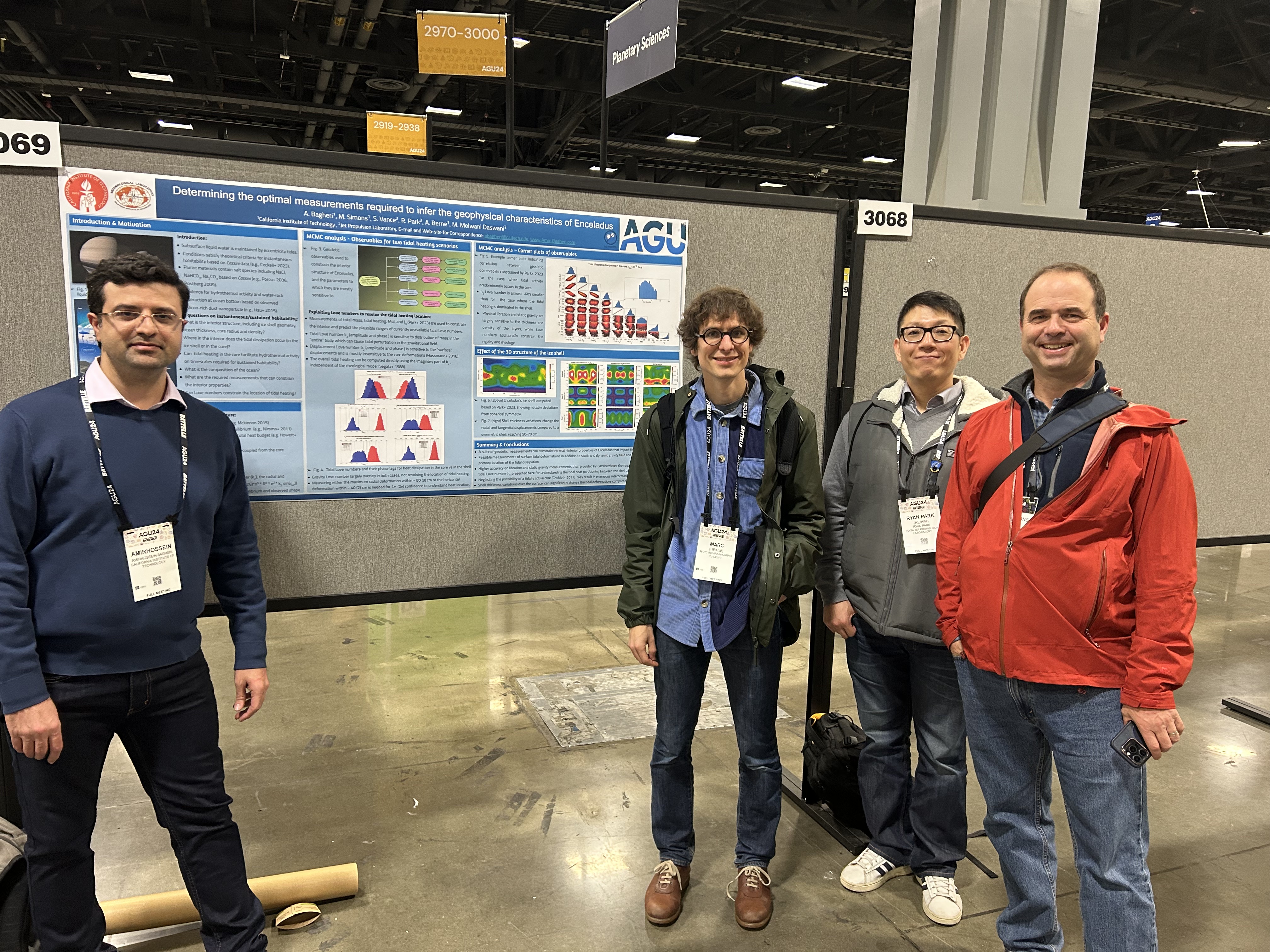
December 2024: I presented a poster on Enceladus’s interior structure (geodetic constraints) at AGU in Washington, D.C., and co-authored a poster on whether Enceladus’s subsurface ocean is global with current constraints. Great to meet colleagues from around the world.
At my poster in AGU 2024 with Mark (Simons), Mark (Panning), Marc (Navarro), and Ryan Park.
November 2024: I participated in a Keck Institute for Space Studies workshop exploring digital twins for solar system exploration. Program details here.
September 2024: I helped journalists and science communicators with planetary-science topics—see a LiveScience article on gravitationally perturbed planets here.
May 2024: On a flight from Boston to Los Angeles, I captured a vivid aurora above Toronto:
Literally right now, on a plane from Boston back to LA, I am seeing these gorgeous #Aurora above Toronto. This is incredible. Period. #AbSciCon24 #AbScicon pic.twitter.com/cLnTQhC477
— Amirhossein Bagheri (@bagheriamirh) May 11, 2024
May 2024: I spoke at the Astrobiology Science Conference (AbSciCon) about a New Frontiers mission concept (Nightingale) to Enceladus to assess habitability.
March 2024: I presented a poster on Enceladus tides at the 55th Lunar and Planetary Science Conference, my first in-person LPSC.
Spring 2024: I participated in Caltech’s Earthquake Fellows program to help talented high-school students explore earthquake science.
March 2024: I joined a filmed interview on moons in the solar system (details forthcoming). July 2023: I assisted BBC for a documentary on ongoing processes in the solar system.
August 2021: I was featured on NASA’s official Twitter and Facebook accounts (InSight mission):
InSight wants to give a big shout out to Amirhossein Bagheri, one of the amazing graduate students who has contributed to the mission’s success. Amir was born in Iran and is now pursuing a PhD at ETH Zurich. He recently published a new model on the origin of Mars’ moons. Go Amir! pic.twitter.com/1AdQeiSBSB